

California Caregiver Wage Theft: The 10 Most Common Ways Caregivers Lose Thousands in Unpaid Wages
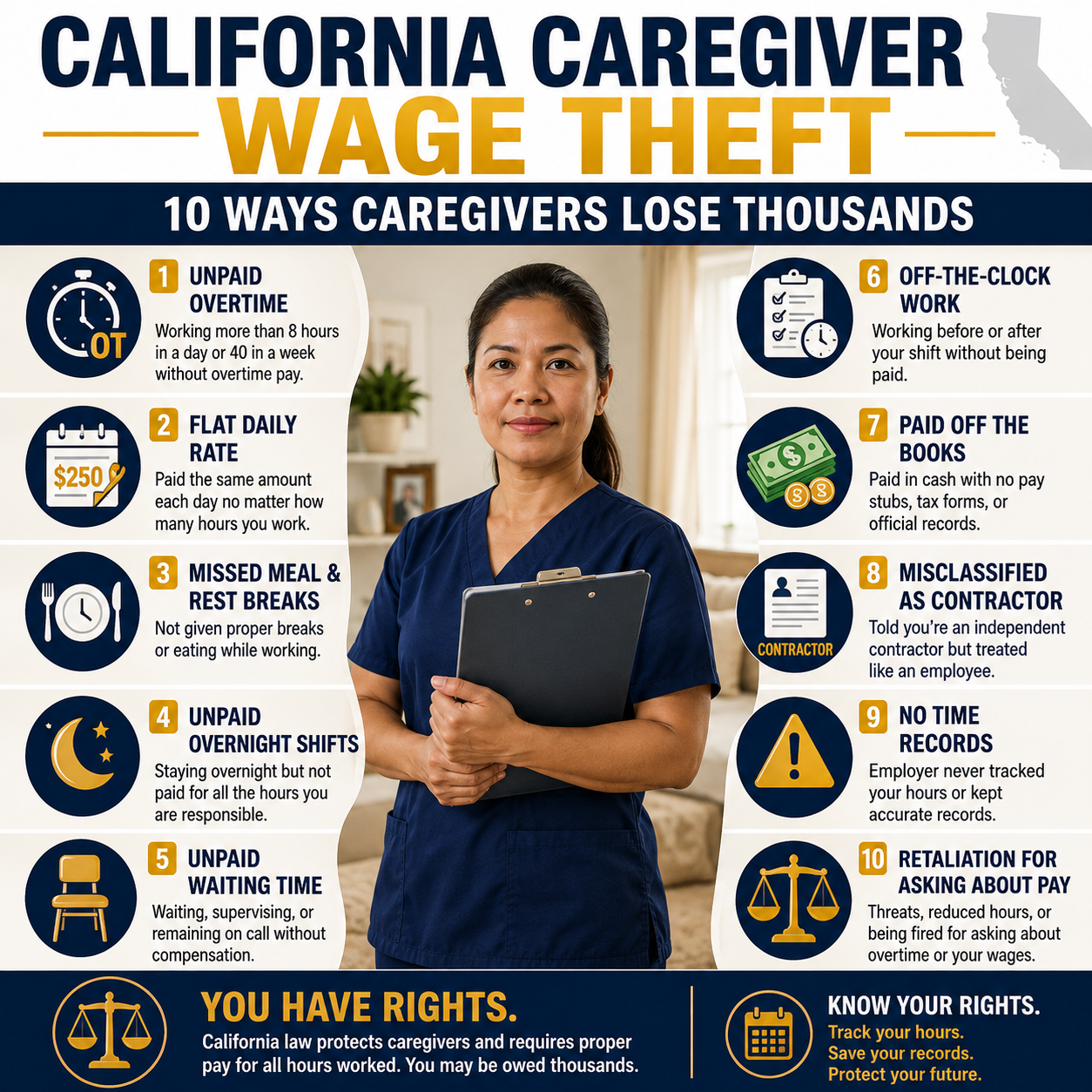
Most caregivers enter the profession because they genuinely want to help others.
They provide companionship, medication reminders, mobility assistance, meal preparation, transportation, personal care, and emotional support to elderly and disabled clients.
Unfortunately, many caregivers are not paid correctly for the work they perform.
Some employers misunderstand California wage laws. Others intentionally ignore them. Either way, the result is often the same: caregivers lose money they legally earned.
Many don't even realize it until years later.
If you're a caregiver in California, understanding the most common forms of wage theft can help you recognize whether your own pay deserves a closer look.
What Is Wage Theft?
Wage theft occurs when an employer fails to pay an employee all of the wages they have legally earned.
It doesn't always involve obvious misconduct.
Sometimes wage theft happens because:
Payroll systems are inaccurate.
Employers misunderstand overtime rules.
Families don't realize they are household employers.
Agencies incorrectly classify employees.
Caregivers are paid flat daily rates regardless of hours worked.
Regardless of the reason, California labor laws provide important protections for caregivers.
Why Caregivers Are Especially Vulnerable
Unlike many traditional workplaces, caregivers often work:
Inside private homes
Alone
Without supervisors
Without coworkers
Without time clocks
Without HR departments
Many are paid:
In cash
By personal check
Through payment apps
Using handwritten schedules
These informal arrangements can make wage violations harder to recognize.
1. Paying a Flat Daily Rate Instead of Overtime
This is one of the most common wage issues we see.
Example:
A caregiver works:
7:00 AM to 7:00 PM
Six days each week
They're paid:
$250 per day
No matter how many hours they work.
Many caregivers assume this is legal because they agreed to the arrangement.
However, a flat daily rate does not automatically satisfy California overtime requirements.
If overtime should have been paid, the employer generally cannot avoid that obligation simply by paying one fixed amount.
2. Unpaid Overtime
California has some of the strongest overtime protections in the country.
Many caregivers regularly work:
10-hour shifts
12-hour shifts
16-hour shifts
Overnight shifts
Live-in schedules
Yet they receive exactly the same hourly rate for every hour worked.
Over time, unpaid overtime alone can add up to thousands of dollars.
3. Not Paying for Waiting Time
Many caregivers spend part of their shift:
Waiting for medications
Supervising a sleeping client
Remaining available
Monitoring someone with dementia
Employers sometimes say:
"You're not working."
But if the caregiver remains under the employer's control, that waiting time may still count as compensable work depending on the circumstances.
4. Off-the-Clock Work
Many caregivers perform work before or after their scheduled shifts.
Examples include:
Preparing breakfast before clocking in
Completing documentation after clocking out
Cleaning after the shift officially ends
Answering work calls from home
Small amounts of unpaid work performed every day can become substantial over months or years.
5. Unpaid Overnight Shifts
Overnight care creates some of the most misunderstood wage issues.
Many caregivers:
Stay in the client's home
Wake throughout the night
Help with medications
Prevent falls
Respond to emergencies
Yet employers may only pay for a portion of those hours.
Whether overnight time must be paid depends on the specific facts, including the caregiver's responsibilities and level of freedom during the shift.
6. Missed Meal and Rest Breaks
Caregivers often eat while:
Supervising a client
Preparing medications
Watching someone with dementia
Remaining available
If a caregiver is not truly relieved of all duties during a meal period, that may raise questions under California meal and rest break laws.
7. No Time Records
Many caregivers never:
Clock in
Clock out
Receive timecards
Receive wage statements
Some employers later argue:
"You can't prove your hours."
However, California generally places the responsibility for maintaining accurate payroll records on employers.
Caregivers may still be able to establish their schedules using:
Text messages
Calendars
Care logs
Payment records
Personal notes
Witness testimony
8. Paying Caregivers "Off the Books"
Some employers pay entirely in cash.
Others never provide:
Pay stubs
Tax forms
Payroll records
Being paid off the books does not automatically eliminate a caregiver's wage rights.
California labor protections generally apply regardless of how wages were paid.
9. Misclassifying Caregivers as Independent Contractors
Some caregivers are told:
"You're an independent contractor."
But simply calling someone a contractor does not determine their legal classification.
California law looks at the actual working relationship, including who controls the caregiver's work.
Misclassification can affect:
Overtime
Payroll taxes
Meal breaks
Rest breaks
Wage protections
10. Retaliation for Asking About Pay
Some caregivers fear speaking up because they're worried about:
Losing their job
Having their hours reduced
Receiving fewer assignments
Being treated differently
California law provides protections against many forms of retaliation when employees raise good-faith concerns about wages or workplace rights.
No caregiver should feel forced to remain silent simply because they asked questions about their pay.
Warning Signs You May Be Experiencing Wage Theft
You may want to take a closer look at your pay if:
You work more than 9 hours in a day.
You regularly work overnight.
You are paid the same amount every day regardless of hours.
You never receive overtime.
You don't receive itemized pay stubs.
You eat while working.
You are paid in cash.
You remain available during "breaks."
Your employer never tracked your hours.
You are expected to work before or after your scheduled shift.
One sign alone does not necessarily mean a violation occurred—but multiple warning signs may warrant further review.
What Should You Do If You Think You've Been Underpaid?
If you believe your wages may not have been calculated correctly:
Begin keeping records of:
Your schedule
Start and end times
Overnight shifts
Waiting time
Meal breaks
Pay received
Text messages
Calendars
Care notes
The more information you preserve, the easier it may be to reconstruct your work history.
Frequently Asked Questions
Is wage theft common in caregiving?
Because caregiving often occurs in private homes with informal payroll practices, wage disputes are not uncommon.
Can private families violate California wage laws?
Yes. Depending on the employment arrangement, private households that employ caregivers may have obligations under California labor law.
What if I agreed to a flat daily rate?
An agreement alone does not automatically waive California wage protections.
What if I was paid in cash?
Cash payments generally do not eliminate an employee's right to earned wages or overtime.
Can I recover unpaid wages from years ago?
Potential recovery depends on the facts of your case and applicable legal deadlines, so it's important not to delay if you believe you have a claim.
Final Thoughts
California caregivers perform some of the most demanding and compassionate work in our communities. They care for aging parents, individuals with disabilities, and people recovering from illness—often working long hours under challenging conditions.
Yet many caregivers unknowingly lose thousands of dollars because they assume their pay arrangement is legal simply because "that's how everyone does it."
If you've been paid a flat daily rate, worked overnight shifts, remained on call without compensation, or never received overtime, it's worth taking a closer look at your employment situation.
Understanding your rights is the first step toward protecting them. California labor laws exist to ensure caregivers receive the wages they have earned—and recognizing the warning signs of wage theft can help you determine whether your pay deserves further review.