

California Caregiver Wage Claim Checklist: Everything You Should Gather Before Speaking With an Attorney
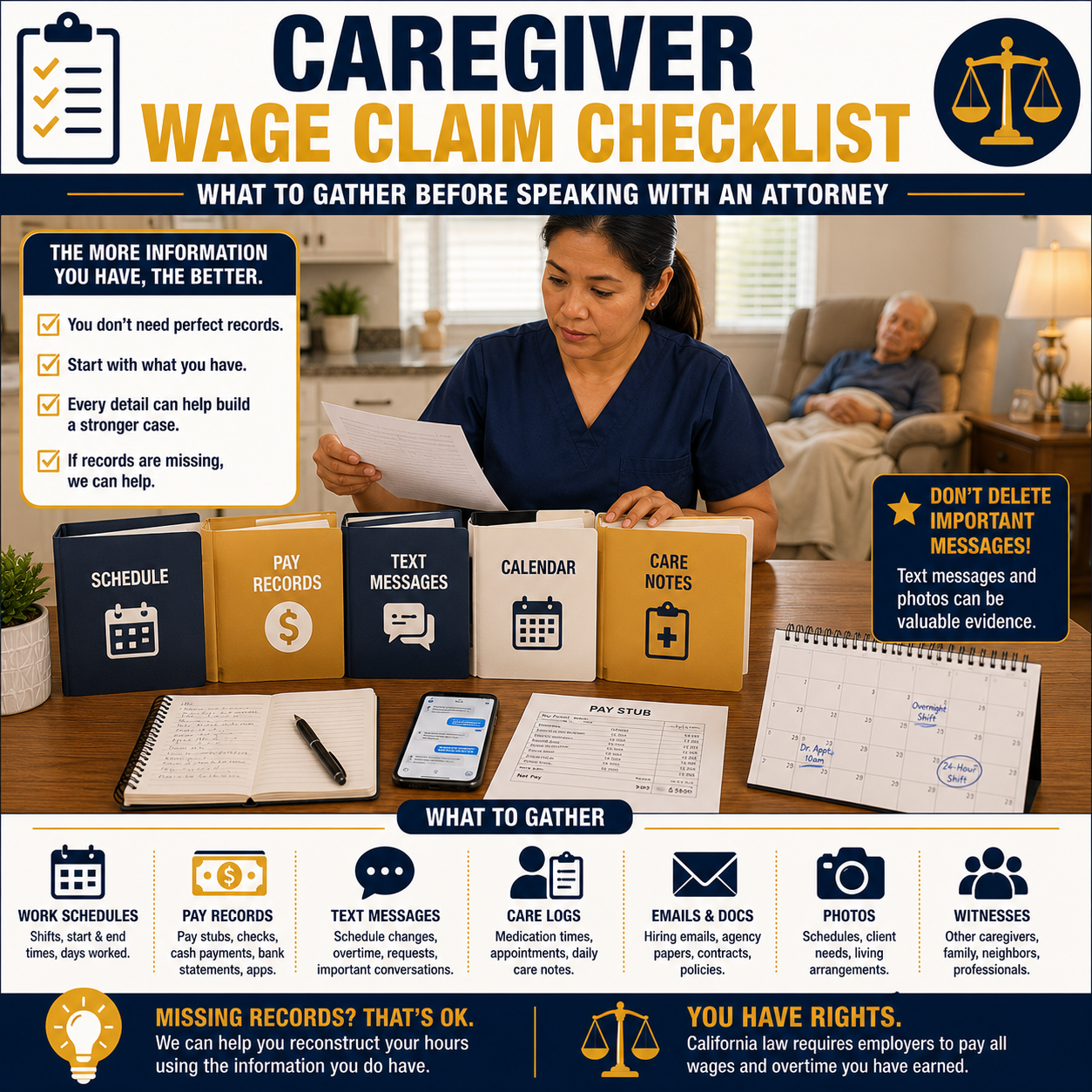
Many caregivers wait months—or even years—to speak with an attorney because they think they don't have enough proof.
They often say:
"I never kept timesheets."
"I was paid in cash."
"I don't have every paycheck."
"The family never tracked my hours."
"I don't know where to start."
The good news is that you do not need perfect records before asking questions about your rights.
In fact, many successful caregiver wage claims begin with only a few pieces of information.
This guide explains what documents can be helpful, what to do if records are missing, and how you can prepare for a productive conversation with an employment attorney.
Why Documentation Matters
Every caregiver's situation is different.
Some worked:
12-hour shifts
Overnight shifts
Live-in schedules
24-hour care
Others were paid:
Hourly
A flat daily rate
Weekly
In cash
Through Zelle or Venmo
The more information available, the easier it may be to evaluate whether your wages were calculated correctly.
Fortunately, valuable evidence often exists even when formal payroll records do not.
Start With the Basics
Before meeting with an attorney, write down:
Your employer's name
The client's name (if different)
Whether you worked for a private family or home care agency
Your approximate employment dates
Your job title
Your typical work schedule
Even approximate dates are helpful if you don't remember the exact day you started.
1. Your Typical Work Schedule
One of the most important pieces of information is your regular schedule.
For example:
Monday–Friday
7:00 AM – 7:00 PM
Or:
Friday morning through Sunday evening
24-hour live-in care
Even if your schedule changed occasionally, your typical routine can provide an important starting point.
2. Calendars
Many caregivers already have valuable records without realizing it.
Helpful calendars include:
Paper calendars
Google Calendar
Phone calendars
Appointment books
Family planners
These may show:
Days worked
Client appointments
Vacation days
Shift changes
3. Text Messages
Text messages are often among the strongest forms of evidence.
Examples include messages about:
Shift assignments
Overtime
Overnight coverage
Client needs
Schedule changes
Time off
Avoid deleting old conversations.
4. Pay Records
Gather any records showing how you were paid.
Examples include:
Pay stubs
Personal checks
Direct deposits
Zelle
Venmo
Cash App
Bank statements
Written payment logs
Even if some records are missing, partial payment history can still be useful.
5. Time Logs
Did you ever write down your hours?
Examples include:
Notebook entries
Timesheets
Notes on your phone
Daily planners
Work journals
Even informal notes may help reconstruct your schedule.
6. Overnight Notes
If you worked overnight, try to remember:
How often you woke up
Why you woke up
Bathroom assistance
Medication reminders
Falls
Dementia supervision
Medical emergencies
Overnight interruptions can be important when evaluating compensable work time.
7. Care Logs
Many caregivers keep care records for clients.
These may include:
Medication schedules
Blood pressure readings
Meal records
Mobility notes
Behavioral observations
Appointment notes
Because they are dated, they can help establish your work schedule.
8. Employment Documents
Gather anything related to your hiring.
Examples include:
Offer letters
Employment agreements
Agency paperwork
Employee handbooks
Orientation materials
Training documents
Even a simple email confirming your start date can be helpful.
9. Photographs
Pictures can sometimes establish:
Dates
Locations
Overnight stays
Medical equipment
Living arrangements
Time-stamped photographs may support your timeline.
10. Emails
Search your email for:
Schedule confirmations
Payroll discussions
Time-off requests
Client updates
Hiring communications
Even older emails may contain valuable information.
11. Witnesses
Consider people who may remember your work schedule.
Examples include:
Other caregivers
Nurses
Physical therapists
Neighbors
Family members
Friends who visited
Delivery drivers
You do not need witness statements before contacting an attorney, but it is helpful to identify potential witnesses.
12. Wage Statements
If you received pay stubs, save every copy you can find.
Review them for:
Hours worked
Hourly rate
Overtime
Deductions
Employer information
Missing or inaccurate wage statements may raise additional legal issues.
13. Personal Notes
Write down anything you remember, including:
Your daily routine
Typical start and end times
Meal breaks
Waiting time
Overnight responsibilities
Vacation periods
Changes in your schedule
Do this while the details are still fresh in your mind.
14. A List of Questions
Many caregivers forget what they wanted to ask during an initial consultation.
Write down questions such as:
Was I entitled to overtime?
Was my flat daily rate legal?
Should overnight hours have been paid?
What if I was paid in cash?
Can I recover unpaid wages from years ago?
What happens if my employer never kept time records?
Having your questions prepared helps you make the most of your consultation.
Don't Worry If You're Missing Records
One of the biggest misconceptions is:
"I don't have enough proof."
Remember:
Many caregivers never receive:
Timecards
Pay stubs
Written schedules
Employment contracts
California employers generally have recordkeeping responsibilities, and a lack of employer records does not automatically prevent a caregiver from pursuing a wage claim.
Other evidence—such as text messages, calendars, payment history, and your own recollection of your regular schedule—may still be helpful.
Create a Simple Timeline
Before speaking with an attorney, consider creating a one-page timeline.
Include:
When you started
When you stopped working
Typical hours
Pay received
Major schedule changes
Overnight shifts
Important conversations
A timeline helps organize your memories and gives your attorney a clear overview of your employment.
Frequently Asked Questions
What if I don't remember my exact hours?
That's okay. A consistent estimate of your regular schedule is often more useful than trying to remember every single day.
What if I was paid entirely in cash?
Cash payments do not automatically eliminate your wage rights. Gather any evidence showing when and how you were paid.
Should I contact my employer first?
Every situation is different. Before taking action, it may be helpful to understand your legal rights and the facts of your employment.
What if I already quit?
Former caregivers may still have wage claims depending on the circumstances and applicable legal deadlines.
Your California Caregiver Wage Claim Checklist
Before your consultation, gather as many of the following items as possible:
✓ Employment dates
✓ Typical work schedule
✓ Pay records
✓ Text messages
✓ Calendars
✓ Time logs
✓ Overnight notes
✓ Care logs
✓ Emails
✓ Pay stubs
✓ Employment agreements
✓ Photos
✓ Bank statements
✓ Names of potential witnesses
✓ Questions you want answered
Remember, you do not need every item on this list to have a meaningful conversation about your situation.
Final Takeaway
Many California caregivers delay seeking legal advice because they believe they need perfect documentation before speaking with an attorney.
In reality, that's rarely the case.
Even if your employer never tracked your hours, paid you in cash, or failed to provide pay stubs, you may still have valuable evidence that helps tell the story of your employment.
By gathering your schedules, payment records, text messages, calendars, care logs, and personal notes, you'll be in a much stronger position to understand your rights and evaluate whether you may be owed unpaid wages, overtime, or other compensation under California law.
Taking a little time to organize your records today can make the process much easier if you decide to seek legal guidance.