

How Far Back Can Caregivers Recover Unpaid Wages in California?
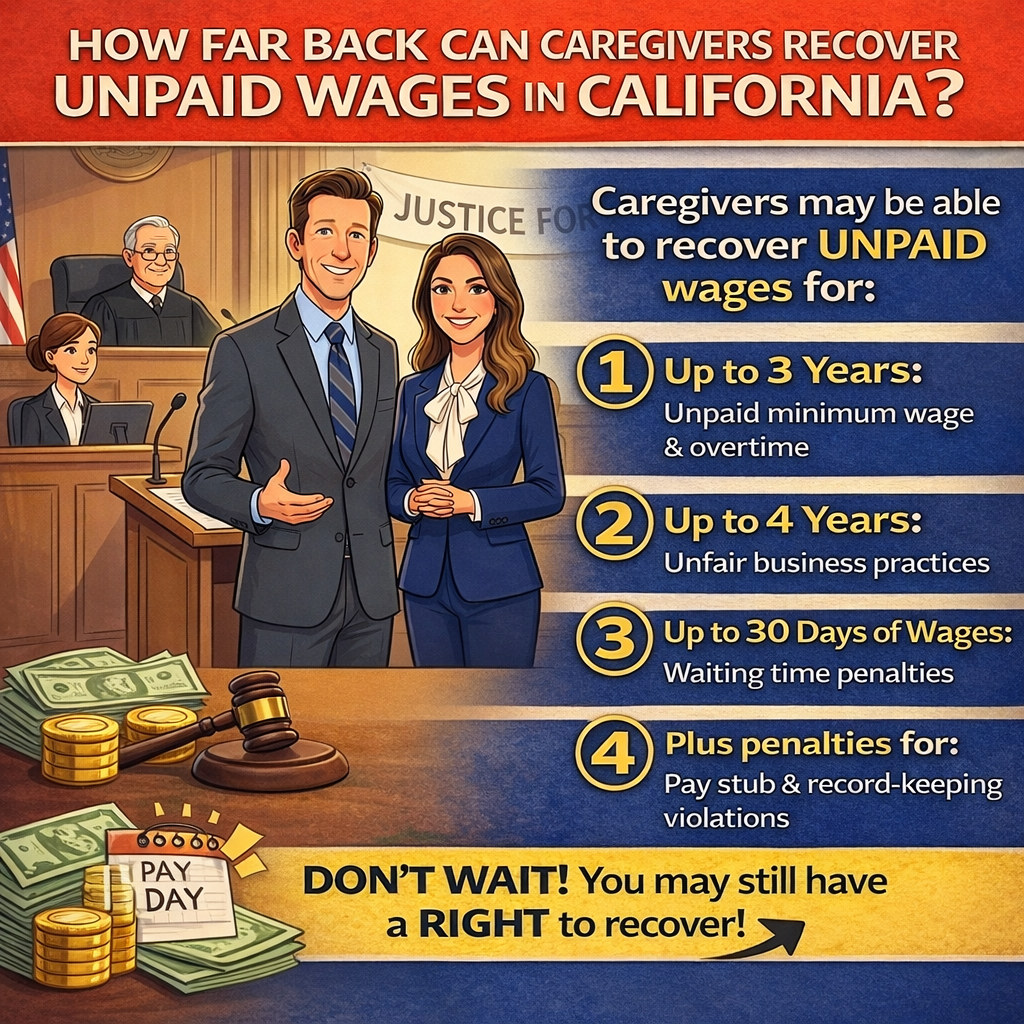
Caregivers often work long hours, overnight shifts, and even 24-hour schedules — yet many are paid improperly for years before realizing something isn’t right.
One of the most common questions we hear is:
“Is it too late to recover unpaid wages?”
In many cases, the answer is no.
California law gives caregivers powerful tools to recover years of unpaid wages, overtime, and penalties — even if the underpayment happened in the past.
This article explains how far back caregiver wage claims can go, what laws apply, and why acting sooner is always better.
California Has Some of the Strongest Wage Laws in the Country
California wage laws strongly favor employees — especially domestic workers and caregivers — because the legislature recognized how vulnerable this workforce can be to wage theft.
If you were:
Paid a flat daily rate
Denied overtime
Not paid for overnight or on-call hours
Misclassified as an independent contractor
You may still be able to recover unpaid wages years later.
The Look-Back Period Depends on the Type of Claim
How far back you can recover unpaid wages depends on the legal claims involved.
1. Unpaid Minimum Wage & Overtime — Up to 3 Years
Under California law, caregivers can generally recover unpaid wages for:
Minimum wage violations
Overtime violations
👉 Look-back period: up to 3 years
This is the most common recovery period for caregiver wage claims.
2. Unpaid Wages Plus Penalties — Up to 4 Years
If your claim includes unfair business practices (which many wage violations qualify as), the look-back period can extend to:
👉 Up to 4 years
This often applies when employers:
Systematically paid illegal daily rates
Failed to track hours
Ignored overtime laws over long periods
3. Waiting Time Penalties (Up to 30 Days of Pay)
If your employer:
Failed to pay all wages when you left the job
Withheld final overtime or minimum wages
You may be entitled to waiting time penalties equal to:
Up to 30 days of your daily wages
These penalties are in addition to unpaid wages.
4. Pay Stub Violations & Record-Keeping Failures
Employers are required to provide accurate wage statements and keep proper records.
If they failed to:
Track your hours
Provide proper pay stubs
Document overtime
You may be entitled to additional statutory penalties on top of back pay.
Flat Daily Rates Can Unlock Years of Back Pay
Caregivers paid flat daily rates are among those most likely owed significant back wages.
Common illegal rates include:
$180/day
$200/day
$250/day
Even if you agreed to the rate, California law does not allow employers to waive minimum wage or overtime requirements.
Over time, these violations can add up to:
Tens of thousands of dollars
Sometimes more
Live-In and Overnight Caregivers Often Have the Largest Claims
Live-in caregivers frequently assume they cannot recover pay for:
Overnight hours
On-call time
Sleep interruptions
In reality, many live-in caregivers are owed years of unpaid overtime, especially when:
Sleep is interrupted
They must remain on site
They are “on call” overnight
Immigration Status Does NOT Limit Recovery
A critical point for many caregivers:
👉 Your immigration status does NOT affect how far back you can recover wages.
California law:
Protects undocumented workers
Prohibits retaliation
Prevents employers from using immigration status as a defense
Your rights apply regardless of status.
Why Waiting Can Cost You Money
Every day you wait, you may lose the ability to recover older wages due to statutes of limitation.
Once time expires:
That portion of unpaid wages may be lost forever
Even if the employer clearly violated the law
That’s why speaking with an attorney sooner — even if you’re still working — is so important.
What Should Caregivers Do Now?
If you believe you were underpaid in the past:
Write down your work history (hours, shifts, overnight time)
Save pay records (checks, Zelle/Venmo, texts)
Don’t assume it’s too late
Get a confidential legal review
At CaregiverOvertime.com, our attorneys have helped caregivers recover over $70 million in unpaid wages, including claims going back several years.
Final Takeaway
In California, caregivers can often recover years of unpaid wages, overtime, and penalties — but the clock is always running.
If you were underpaid in the past, you may still have valuable claims today.
👉 Visit CaregiverOvertime.com for a free, confidential consultation
You care for others — the law protects your right to be paid fairly.