

Can Caregivers Be Paid a Salary? What California Law Really Allows
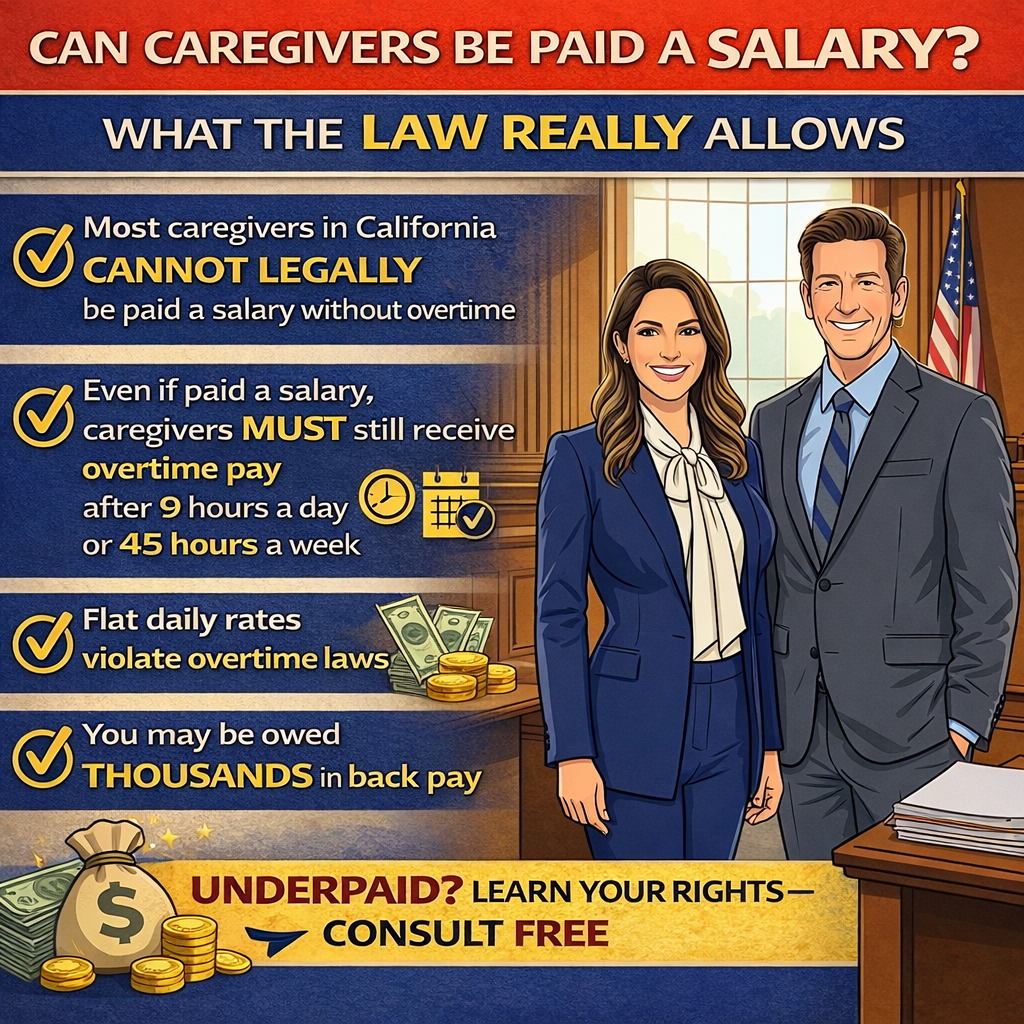
Caregivers often hear employers say things like:
“You’re salaried, so overtime doesn’t apply.”
“Your daily rate covers everything.”
“This is just how caregiving jobs work.”
In California, most of those statements are wrong.
While salaries are legal in some industries, caregivers are almost never exempt from overtime, even if they’re paid a salary or flat rate. In fact, salary pay is one of the most common ways caregivers are misclassified and underpaid.
This article explains when caregiver salaries are allowed, what employers must still pay, and how to know if your rights are being violated.
Being Paid a Salary Does NOT Cancel Overtime
A critical rule under California law:
👉 Being paid a salary does not eliminate your right to overtime.
Most caregivers are classified as non-exempt employees, which means:
They must be paid at least minimum wage for every hour worked
They must receive overtime pay, regardless of how they’re paid
Employers cannot avoid overtime by labeling pay as “salary.”
Who Is Allowed to Be Salaried Under California Law?
Only certain exempt employees can legally be paid a salary without overtime. These exemptions are very narrow and typically include:
Executives
Administrative professionals
Highly skilled professionals (like doctors or lawyers)
Caregivers almost never qualify for these exemptions because:
They do not manage a business
They do not exercise independent policy-making authority
Their work is hands-on care, not administrative or executive work
If your job involves caring for another person, you are almost certainly non-exempt.
What Happens If a Caregiver Is Paid a Salary Anyway?
Even if an employer pays a caregiver a salary, California law treats that salary as payment for regular time only.
That means:
The salary must still equal at least minimum wage for all hours worked
Overtime must be paid on top of the salary
Overtime is calculated at 1.5× your regular hourly rate
Example:
If you are paid:
$1,200 per week as a “salary”
You work 60 hours
The law requires:
The salary to cover the first 45 hours
Overtime pay for the remaining 15 hours
If no overtime is paid, the employer is violating the law.
Daily Rates Are Treated the Same Way
Many caregivers are paid flat daily rates like:
$200 per day
$220 per day
$250 per day
Under California law:
A daily rate is treated the same as a salary
It only covers regular hours
Overtime must still be paid separately
Daily rates almost always result in:
Minimum wage violations
Overtime violations
Years of unpaid wages
Live-In and 24-Hour Caregivers Are Commonly Mispaid
Live-in caregivers are especially vulnerable to illegal salary arrangements.
Common employer claims include:
“Sleep time is unpaid”
“You live here, so hours don’t count”
“Your salary covers overnight care”
In reality:
Most overnight and on-call time counts as paid work
Interrupted sleep is paid time
Overtime still applies after 9 hours in a day or 45 hours in a week
Overtime Rules for Caregivers
Under California’s Domestic Worker Bill of Rights, most caregivers are entitled to overtime when they work:
⏱ More than 9 hours in a single day
📆 More than 45 hours in a workweek
This applies no matter how you are paid — hourly, daily, or salaried.
Immigration Status Does NOT Affect Salary or Overtime Rights
Many caregivers fear challenging salary pay because of immigration concerns.
California law is clear:
Undocumented caregivers have full wage rights
Employers cannot retaliate
Immigration status cannot be used against you
Your right to overtime exists regardless of status.
Signs a Caregiver Salary Is Illegal
You may be misclassified if:
You are told you’re “salaried” and not paid overtime
You work long or overnight shifts
Your pay doesn’t increase when hours increase
You don’t receive detailed pay stubs
You’re paid a flat daily or weekly amount
These are major red flags.
You May Be Owed Back Pay
If you were paid a salary without overtime, you may be owed:
Unpaid overtime wages
Unpaid minimum wages
Waiting time penalties
Interest and statutory penalties
Many caregiver claims go back several years and can total tens of thousands of dollars.
What Should You Do Next?
If you’re paid a salary or daily rate as a caregiver:
Write down your actual hours worked
Save pay records and messages
Don’t assume your employer is right
Get a confidential legal review
At CaregiverOvertime.com, our attorneys have helped caregivers recover over $70 million in unpaid wages by enforcing California wage laws.
Final Takeaway
Caregivers in California can almost never be treated as salaried employees exempt from overtime. If you’re paid a salary without overtime, there’s a strong chance the law is being violated.
👉 Visit CaregiverOvertime.com for a free, confidential consultation
You care for others — the law requires that you be paid fairly.