

California Caregiver Overtime Calculator: Estimate What You May Be Owed
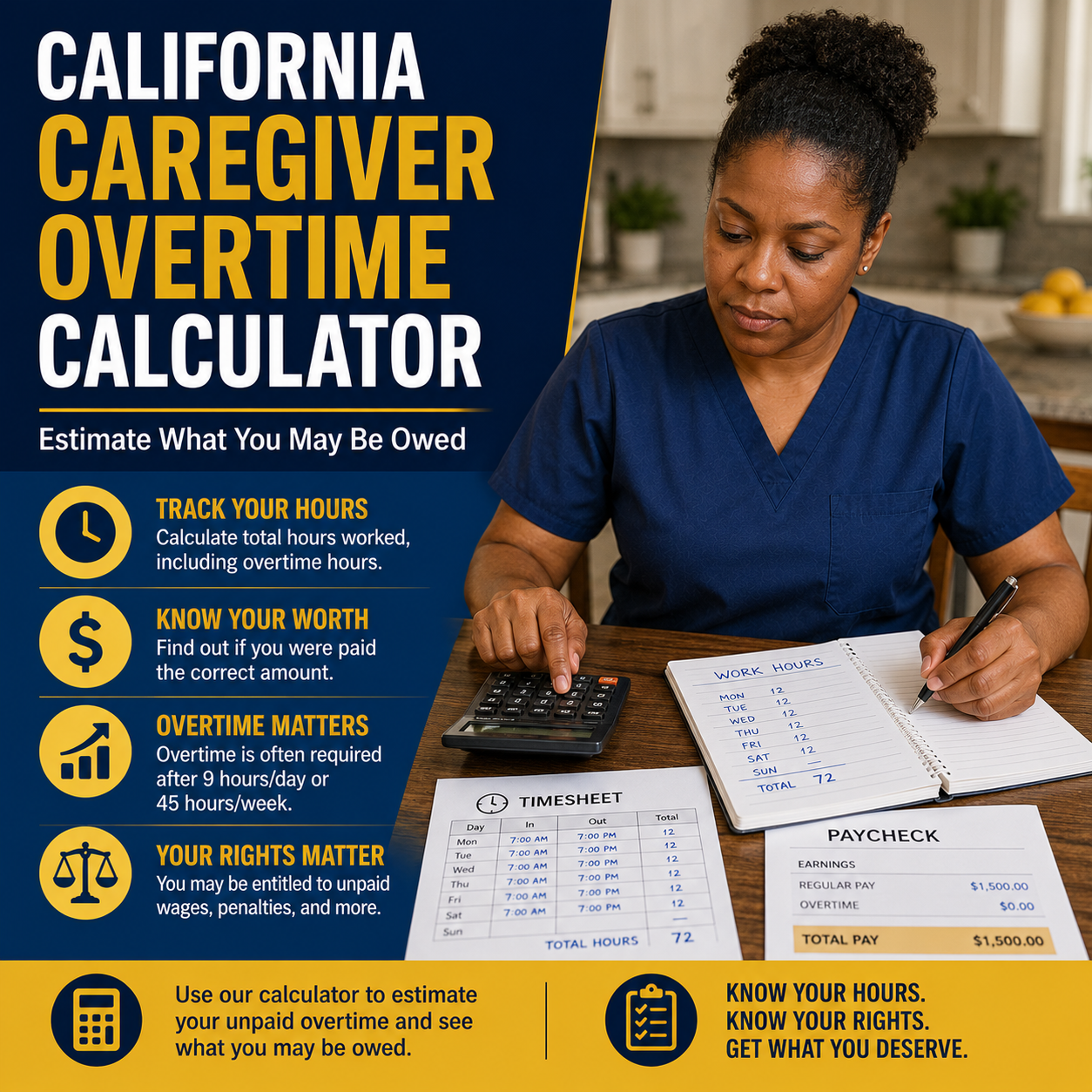
Many California caregivers work incredibly long hours while receiving the same flat rate every day or week.
If you've ever wondered:
"How much unpaid overtime am I owed?"
"Was I supposed to be paid for overnight hours?"
"Did my employer calculate my wages correctly?"
"Is my wage claim worth pursuing?"
You're not alone.
One of the most common questions caregivers ask is:
"How much money could I recover?"
The answer depends on several factors, but you can use the steps below to estimate whether you may have a significant unpaid wage claim.
Important: This calculator provides only a general estimate and is not legal advice. Every wage claim depends on the specific facts of your employment.
Step 1: Calculate Your Average Hours Worked
Write down your average work schedule.
For example:
Monday: 12 hours
Tuesday: 12 hours
Wednesday: 12 hours
Thursday: 12 hours
Friday: 12 hours
Saturday: 12 hours
Total Weekly Hours:
72 Hours
If your schedule changed from week to week, estimate your average.
Include:
Active caregiving
Overnight work
Waiting time that may qualify as work
Interrupted sleep
Time spent supervising the client
Step 2: Determine Your Weekly Pay
Next, calculate how much you actually received.
Examples:
$250 per day
$1,400 per week
$200 cash per shift
Flat salary
Write down:
Weekly Pay = $________
Step 3: Calculate Your Approximate Hourly Rate
Divide your weekly pay by your total weekly hours.
Example:
$1,400 ÷ 72 hours = $19.44 per hour
This provides an estimated regular hourly rate.
Step 4: Estimate Your Overtime Hours
Many California caregivers are entitled to overtime after:
9 hours in a workday
45 hours in a workweek
Example:
72 hours worked
45 regular hours
27 overtime hours
Those overtime hours generally should be paid at one-and-one-half times your regular rate.
Step 5: Compare What You Were Paid
Ask yourself:
Did your pay increase when:
You worked longer shifts?
You worked overnight?
You worked weekends?
You worked extra days?
If your paycheck remained exactly the same regardless of hours worked, you may have been underpaid.
Simple Example
Suppose a caregiver worked:
12 hours per day
6 days per week
Total: 72 hours
The caregiver received:
$1,500 weekly
Because overtime should generally be paid at a higher rate, simply receiving a flat weekly payment may not satisfy California wage laws.
This example illustrates why many caregivers discover they may be owed additional wages after reviewing their schedules.
Additional Hours That May Count
Many caregivers overlook hours that may still qualify as paid work.
Examples include:
Waiting Time
If you remained available for the client and could not freely leave, waiting time may count as hours worked.
Overnight Time
If you stayed overnight with the client, portions of that time may qualify as compensable work depending on your responsibilities and interruptions.
Interrupted Sleep
Helping a patient:
Use the restroom
Take medication
Prevent wandering
Respond to emergencies
may increase compensable work hours.
Travel Between Clients
In some situations, travel time may also count as paid work.
Common Signs You May Be Owed Money
You may have a wage claim if:
You were paid the same amount regardless of hours worked.
You worked 12-, 16-, or 24-hour shifts.
You worked overnight without additional pay.
You were paid a flat daily rate.
You received a weekly salary.
You were paid cash.
You never received overtime.
You never received pay stubs.
One sign alone does not necessarily mean a violation occurred, but several together may indicate that your pay should be reviewed.
What Can Increase the Value of a Wage Claim?
In addition to unpaid overtime, some caregivers may also recover:
Minimum wage differences
Meal break premiums
Rest break premiums
Waiting time penalties
Interest on unpaid wages
These additional amounts may significantly increase the value of a claim.
What Information Should You Gather?
Before estimating your claim, collect:
Work schedules
Text messages
Calendars
Pay records
Bank deposits
Cash payment records
Care logs
Notes about overnight interruptions
Even if your employer failed to keep accurate records, your own documentation may help establish your work schedule.
Frequently Asked Questions
Can I estimate my unpaid wages if I was paid cash?
Yes. Being paid in cash does not automatically prevent you from estimating your hours or pursuing unpaid wages.
What if I don't have pay stubs?
Many caregivers do not receive formal payroll records. Other evidence, including calendars, text messages, and payment history, may still help reconstruct your work schedule.
Does overnight work count?
It can. Overnight work, interrupted sleep, and employer-controlled waiting time may affect your total compensable hours depending on the facts of your employment.
Can I estimate wages from several years ago?
Yes. Even if you no longer work for the employer, you may still be able to estimate your hours using calendars, schedules, and other records.
Final Thoughts
Many caregivers underestimate how much unpaid overtime they may be owed because they focus only on active caregiving tasks.
California labor laws may require employers to compensate caregivers for a broader range of work time, including certain waiting periods, overnight responsibilities, and long shifts.
This calculator is intended to help you recognize when your pay may deserve a closer look—not to provide a definitive legal calculation.
If your estimate suggests that you worked substantially more hours than you were paid for, it may be worthwhile to have your situation reviewed by an attorney experienced in California caregiver wage and hour law.
A short review today could help you understand whether you may be entitled to recover unpaid wages, overtime, and other compensation under California law. Contact Us For A Free Consultation.