

Do Caregivers Get Paid for Waiting Time Between Tasks? California Law Explained
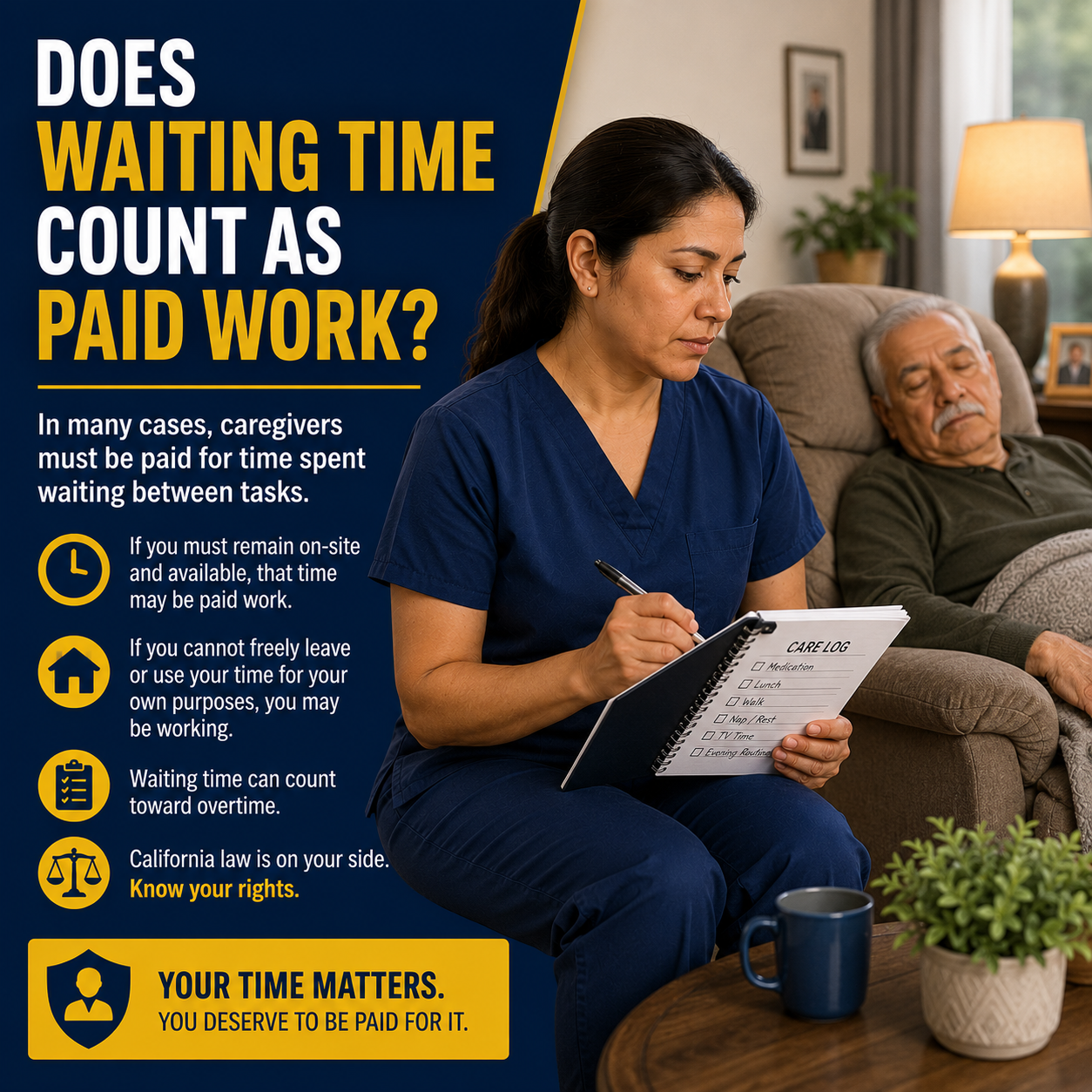
Caregiving is rarely a job where you are busy every minute of every shift.
Many caregivers spend portions of the day:
Sitting with an elderly client while they rest
Waiting for medication times
Supervising a client with dementia
Remaining available during naps
Watching television with a patient
Waiting for the next scheduled meal
Staying nearby in case help is needed
Because these periods may seem "quiet," many employers assume they do not have to pay caregivers for this time.
This is one of the most common misconceptions in home caregiving.
Under California law, waiting time may still qualify as paid work time, even if you are not actively bathing, feeding, or assisting the client every minute.
Whether waiting time must be paid depends on several important legal factors.
Why Waiting Time Is One of the Most Misunderstood Wage Issues
Many caregivers believe:
"I'm just sitting here."
"I'm not doing anything."
"The client is sleeping."
"I'm only working when I'm actively helping."
Employers often reinforce these beliefs by saying:
"We'll only pay you when you're busy."
"Downtime doesn't count."
"You're free during those hours."
However, California labor law looks beyond whether you are actively performing physical tasks.
Instead, one of the biggest questions is:
Who controls your time?
California Law Focuses on Employer Control
One of the most important principles in California wage law is whether the employee remains subject to the employer's control.
Ask yourself these questions:
Could you leave the home?
Could you go shopping?
Could you take another job?
Could you visit friends?
Could you ignore the client if they called for help?
If the answer is "no," there is a strong possibility that your waiting time may still count as hours worked.
Simply because you are waiting does not necessarily mean you are off duty.
Common Examples of Paid Waiting Time
Waiting While the Client Naps
Suppose your client takes a two-hour afternoon nap.
During that time:
You remain inside the home.
You monitor the client.
You are expected to respond immediately if they wake up.
You cannot leave the property.
Although you may not be actively performing physical care, you are still providing supervision and remaining available.
Depending on the circumstances, this waiting time may qualify as compensable work time.
Waiting Between Medication Times
Many caregivers administer medication several times throughout the day.
Between medication schedules, caregivers often:
Prepare meals
Monitor the client
Stay nearby
Wait for the next task
If you are required to remain available and cannot freely use your time for your own purposes, those waiting periods may still be paid.
Watching Television With a Patient
Many caregivers spend hours:
Watching television
Reading
Sitting nearby
while supervising elderly clients.
Although this may not appear to be active work, you are still responsible for:
Monitoring safety
Responding to emergencies
Preventing falls
Assisting whenever necessary
Your responsibility has not ended simply because the client is relaxing.
Waiting During Medical Appointments
Imagine taking a client to a doctor's appointment.
The physician sees the patient for forty-five minutes.
You remain in the waiting room because:
You drove the client.
You must assist afterward.
You cannot leave.
This waiting time may still be considered work because you remain engaged in your caregiving responsibilities.
When Waiting Time May Not Be Paid
Not every period of inactivity qualifies as paid work.
For example, if you are:
Completely relieved of all duties
Free to leave
Free to use your time however you choose
Not expected to respond if the client needs assistance
that period may not be compensable.
The key difference is freedom.
If you truly control your own time, the employer may not be required to pay you during that period.
Live-In Caregivers Face Additional Challenges
Live-in caregivers experience some of the most complicated waiting-time issues.
Many live-in caregivers spend hours:
Sitting nearby while a client watches television
Supervising dementia patients
Remaining available overnight
Waiting for the next caregiving task
Because they are continuously responsible for the client, many of these waiting periods may still qualify as work time.
Unfortunately, many employers assume that only active caregiving counts.
That assumption often results in significant underpayment.
Waiting Time and Overnight Care
Overnight caregivers frequently experience waiting periods.
For example:
The client goes to sleep at 10:00 p.m.
The caregiver remains awake or lightly sleeping while:
Monitoring the client
Remaining available
Responding to bathroom requests
Assisting after falls
Helping with wandering or confusion
Although there may be quiet periods, the caregiver's responsibilities continue throughout the night.
Whether those hours must be paid depends on the specific facts, including the level of employer control and the nature of the caregiver's responsibilities.
Flat Daily Rates Often Ignore Waiting Time
Many caregivers receive:
$200 per day
$250 per day
Weekly salaries
These arrangements frequently ignore:
Waiting time
On-call responsibilities
Overnight supervision
Overtime
As a result, caregivers may work many additional compensable hours without receiving any additional pay.
How Waiting Time Can Affect Overtime
Waiting time is important because it increases your total hours worked.
For example:
A caregiver works:
7 hours of active care
5 hours supervising while the client naps or watches television
If those waiting hours count as work time, the caregiver has worked:
12 hours
Instead of 7.
That difference may trigger overtime obligations under California law.
Over weeks, months, and years, these additional hours can significantly increase the amount of unpaid wages owed.
What Evidence Can Help Prove Waiting Time?
If your employer did not keep accurate records, you may still be able to demonstrate waiting time using:
Daily schedules
Calendars
Text messages
Care logs
Medication schedules
Witness statements
Notes about your routine
California employers are generally responsible for maintaining accurate time records.
When they fail to do so, caregivers may rely on reasonable estimates supported by available evidence.
Common Employer Misconceptions
Caregivers often hear statements such as:
"You weren't doing anything."
"The client was asleep."
"You were just watching TV."
"You had free time."
However, if you remained responsible for the client's safety and could not freely leave or use your time for personal purposes, those periods may still qualify as hours worked.
What Should Caregivers Do?
If you believe waiting time was excluded from your pay:
1. Keep a Daily Log
Document:
Active caregiving duties
Waiting periods
Supervision responsibilities
Overnight interruptions
2. Save Communication
Keep:
Schedules
Text messages
Care plans
Instructions from the family or agency
3. Understand Your Rights
Many caregivers underestimate how much waiting time contributes to unpaid overtime.
A professional review of your work schedule can help determine whether your employer properly compensated all hours worked.
Frequently Asked Questions
Do caregivers get paid while a client is sleeping?
It depends on the circumstances. If you are required to remain available, supervise the client, or respond to needs, some or all of that time may qualify as paid work.
Does sitting with a client count as work?
It often can. If you are supervising the client and cannot freely use your time for personal purposes, you may still be considered working.
Can my employer refuse to pay me because I was waiting between tasks?
Not necessarily. California law often looks at whether you remained under the employer's control, not simply whether you were actively performing physical tasks.
Can waiting time increase overtime pay?
Yes. If waiting time counts as hours worked, it increases your total hours and may trigger overtime requirements.
Final Takeaway
Many California caregivers assume they should only be paid when they are actively bathing, feeding, or assisting a client.
In reality, caregiving involves much more than physical tasks.
Waiting, supervising, remaining available, and staying ready to respond are often essential parts of the job. In many circumstances, those responsibilities may qualify as compensable work time under California law.
If you spent hours waiting between caregiving tasks but remained responsible for the client's care, your employer may have been required to pay you for that time.
Understanding how California law treats waiting time can make a significant difference in determining whether you are owed unpaid wages or overtime.