

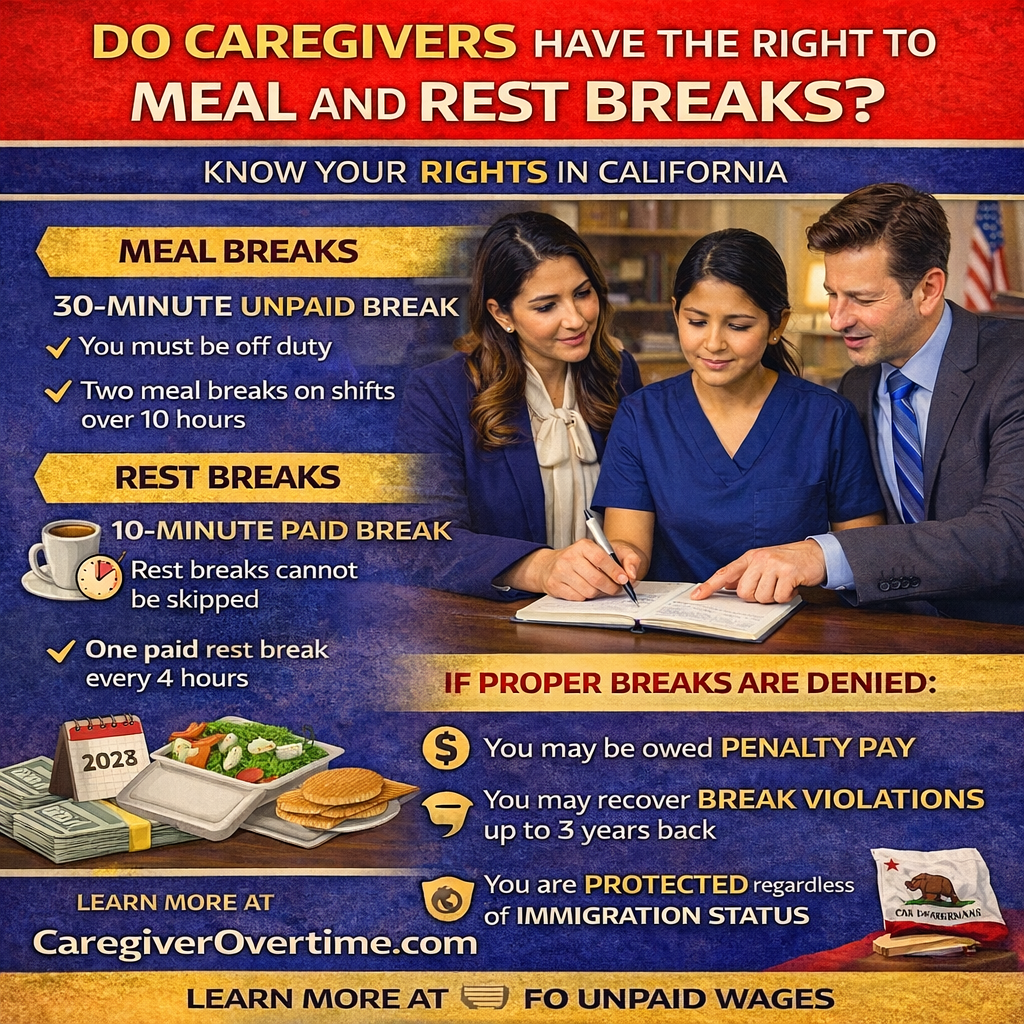
Do Caregivers Have the Right to Meal and Rest Breaks?
If you’re a caregiver working in California, you may be wondering:
Am I entitled to meal breaks?
What about rest breaks?
What if I’m on a 12-hour or 24-hour shift?
Does being a live-in caregiver change the rules?
The short answer is: Yes, caregivers generally have the right to meal and rest breaks under California law.
But the details matter — especially for live-in and overnight caregivers.
Let’s break it down clearly.
California Meal Break Requirements
Under California law, non-exempt employees — including most caregivers — are entitled to:
🥗 Meal Break Rules
A 30-minute unpaid meal break if you work more than 5 hours.
A second 30-minute meal break if you work more than 10 hours.
The break must begin before the end of the 5th hour of work.
You must be fully relieved of all duties during the break.
If you are required to:
Stay on site
Monitor a client
Remain on call
Assist if needed
Then your “meal break” is likely not legally compliant — and it may need to be paid.
California Rest Break Requirements
In addition to meal breaks, caregivers are entitled to:
☕ Rest Break Rules
A 10-minute paid rest break for every 4 hours worked (or major fraction thereof).
Rest breaks should occur in the middle of each work period when possible.
You must be relieved of active duties.
Rest breaks are paid and cannot be combined with meal breaks.
What If You Never Received Breaks?
If your employer failed to provide proper meal or rest breaks, California law provides penalties.
💰 Meal & Rest Break Penalty
You are owed:
One additional hour of pay at your regular rate
For each day a meal break was not provided
Plus another hour for each day a rest break was not provided
This can add up quickly.
For example:
If you worked 5 days per week for one year without proper meal breaks:
5 penalty hours per week
260+ hours per year
Multiplied by your hourly rate
Over multiple years, this can mean thousands of dollars in penalties alone.
Special Rules for Live-In Caregivers
Live-in caregivers face unique challenges.
While there are some limited differences in how overtime applies, meal and rest break protections still generally apply.
Key issues include:
Were you truly relieved of duty?
Could you leave the premises?
Were you required to respond to calls?
Was sleep interrupted?
If you were not fully relieved, your “break” likely counts as work time.
24-Hour Shifts and Breaks
Caregivers working 24-hour shifts often:
Are paid a flat daily rate
Are told meal breaks are “built in”
Are expected to eat while working
But under California law, a valid meal break requires:
✔ You are off duty
✔ You are not responsible for the client
✔ You can use the time freely
If you are expected to assist at any time, that break may be invalid.
Can You Waive Meal Breaks?
In limited situations:
You can waive the first meal break if you work no more than 6 hours.
You can waive the second meal break if you work no more than 12 hours and did not waive the first.
However:
Waivers must be mutual.
Employers cannot pressure you.
Waivers must be voluntary.
Many caregivers are told they “waived” breaks without understanding the law.
Common Violations in Caregiving Jobs
We frequently see:
No meal breaks during 12-hour shifts
No rest breaks at all
“On-duty” meal periods without proper agreement
Being required to eat while assisting the client
Employers saying “caregiving is different”
Caregiving is demanding work — but the law still protects you.
What If You Are Paid a Flat Daily Rate?
Even if you’re paid:
$200 per day
$250 per day
Or a salary
You are still generally entitled to:
Overtime
Meal breaks
Rest breaks
Premium pay if breaks are denied
Flat pay does not eliminate break rights.
Immigration Status Does Not Affect Break Rights
All caregivers in California have wage and break protections — regardless of immigration status.
Employers cannot:
Threaten you
Use status to intimidate you
Deny legal rights
The law protects workers first.
How to Document Missed Breaks
If you suspect violations:
✔ Write down your schedule
✔ Note when breaks were denied
✔ Record interruptions during meal periods
✔ Save pay stubs and messages
Even if you did not track breaks before, you can reconstruct patterns.
How Far Back Can You Recover Break Violations?
In many cases, caregivers may recover:
Up to 3–4 years of unpaid wages
Break penalties
Overtime
Waiting time penalties (if no longer employed)
Every case is different — but break violations significantly increase claim value.
Final Takeaway
If you worked long shifts without proper meal or rest breaks, you may be owed:
Penalty pay
Unpaid overtime
Back wages
Additional damages
Caregivers dedicate their lives to helping others. The law protects your right to rest, eat, and be paid fairly.
👉 Contact Us for a free, confidential consultation.
You focus on care. We focus on protecting your rights.