

Can a Caregiver Be Fired for Asking About Overtime Pay in California?
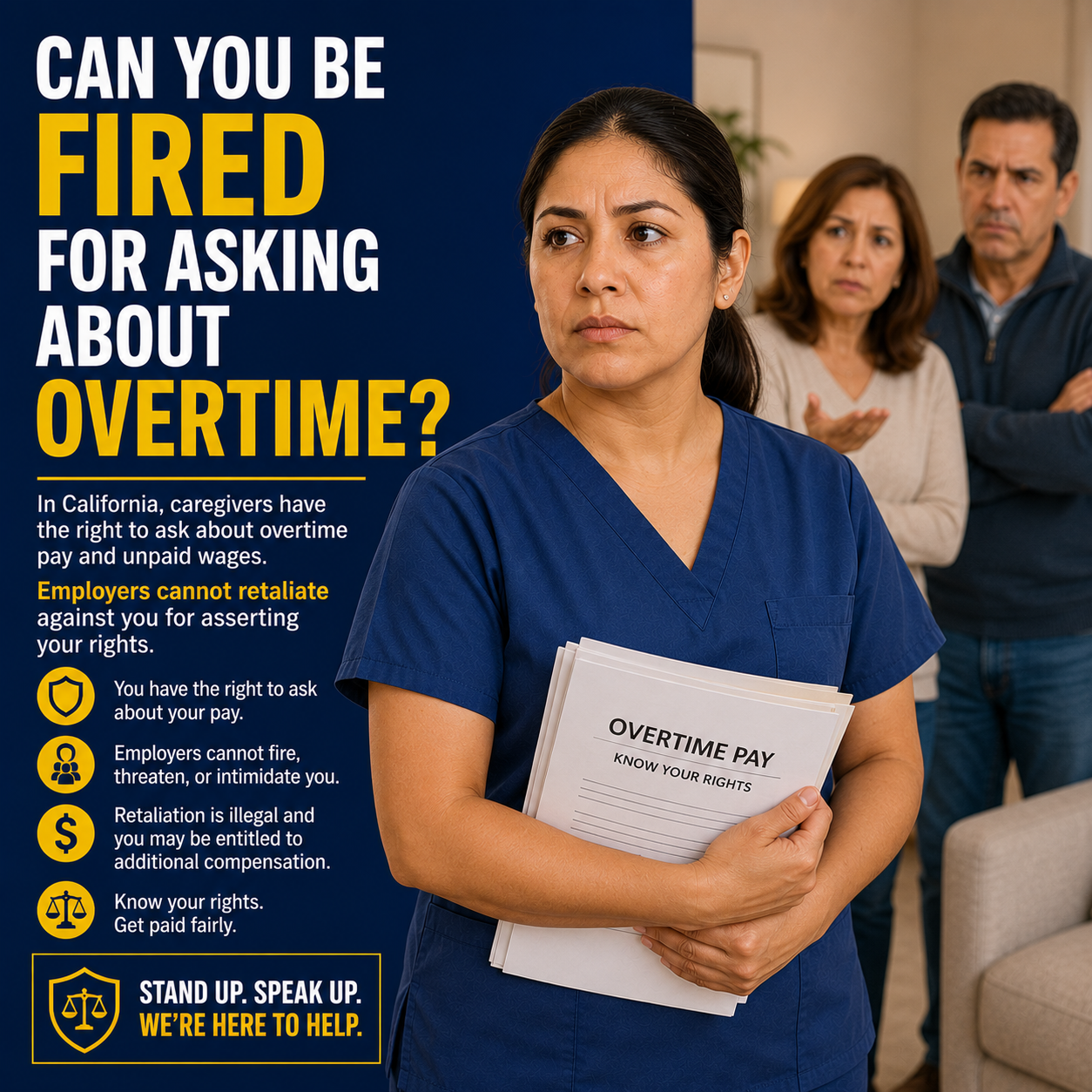
Many caregivers in California work long hours without fully understanding whether they are being paid correctly.
Eventually, many begin asking questions such as:
“Should I be getting overtime?”
“Why am I paid the same no matter how many hours I work?”
“Do overnight hours count?”
Unfortunately, many caregivers are afraid to speak up because they worry about losing their jobs.
This fear is extremely common in caregiving jobs, especially when:
The caregiver works directly for a private family
The arrangement feels personal or informal
The caregiver lives in the client’s home
The caregiver is paid in cash
Immigration status is a concern
The good news is that California law provides strong protections for workers who ask about overtime, unpaid wages, or labor violations.
In many situations, firing or punishing a caregiver for asking about pay may be illegal retaliation.
California Law Protects Workers Who Ask About Wages
Under California labor laws, employees generally have the right to:
Ask about overtime pay
Question wage calculations
Discuss pay with coworkers
Request unpaid wages
Report labor violations
Employers are not allowed to punish workers simply for asserting these rights.
This protection applies to many caregivers, including:
Hourly caregivers
Live-in caregivers
Overnight caregivers
Caregivers working for private families
Caregivers paid in cash
What Is Retaliation?
Retaliation occurs when an employer punishes a worker for asserting a legal right.
In caregiving jobs, retaliation may happen after a caregiver:
Asks about overtime
Requests unpaid wages
Complains about long hours
Questions overnight pay
Contacts an attorney
Files a wage claim
Employers may not openly admit retaliation. Instead, they often disguise it through sudden workplace changes.
Common Examples of Retaliation Against Caregivers
1. Termination
The most obvious example is being fired shortly after raising concerns about pay.
For example:
A caregiver asks about overtime
The family suddenly says “the arrangement is no longer working”
The caregiver is replaced days later
This type of timing can raise serious legal concerns.
2. Reduced Hours
Some employers retaliate by cutting schedules:
Fewer shifts
Shorter hours
Removal from overnight work
This can significantly impact a caregiver’s income.
3. Threats or Intimidation
Employers may say things like:
“If you do not like it, leave.”
“We can find someone else.”
“You should be grateful.”
In some cases, employers threaten:
Immigration consequences
Blacklisting
Housing loss for live-in caregivers
These tactics may be unlawful.
4. Sudden Criticism or Discipline
A caregiver with no prior issues may suddenly receive:
Complaints about performance
New accusations
Increased scrutiny
This sometimes happens after wage concerns are raised.
5. Isolation or Harassment
Employers may:
Create hostility
Exclude caregivers
Make work conditions uncomfortable
Retaliation is not always direct firing. It can also involve pressure designed to force a caregiver to quit.
Caregivers Often Hesitate to Speak Up
Many caregivers stay silent because they:
Feel loyal to the family
Do not want conflict
Fear job loss
Depend on housing
Worry about immigration status
Assume they have no rights
Unfortunately, this allows underpayment to continue for months or even years.
Immigration Status Does Not Eliminate Retaliation Protections
California labor protections generally apply regardless of immigration status.
Employers cannot legally:
Threaten deportation
Use immigration status to intimidate workers
Retaliate for wage complaints
Undocumented caregivers still have important labor protections under California law.
Private Families Can Still Be Liable
Many caregivers assume:
“They are just a family, not a company.”
However, private households can still be considered employers under California labor laws.
This means families may still be legally responsible for:
Overtime violations
Unpaid wages
Retaliation
The fact that the arrangement was informal does not automatically eliminate liability.
What If You Were Paid in Cash?
Many caregivers are paid:
Cash
Zelle
Venmo
Handwritten checks
Without:
Pay stubs
Payroll records
Contracts
Even in these situations, retaliation protections may still apply.
Being paid off the books does not erase your legal rights.
What You Should Do If You Fear Retaliation
1. Begin Documenting Everything
Keep records of:
Hours worked
Schedules
Pay received
Conversations about wages
Text messages
Sudden changes after complaints
Documentation can become extremely important.
2. Stay Professional
Avoid:
Emotional confrontations
Angry messages
Public accusations
A calm, professional approach is usually best.
3. Preserve Evidence
Save:
Payment records
Scheduling texts
Emails
Notes about conversations
Even small details may later help establish retaliation.
4. Understand Timing Matters
If negative treatment begins shortly after asking about overtime, that timing may be important evidence.
For example:
Asking about wages on Monday
Being terminated on Friday
Patterns like this may support a retaliation claim.
What Can Retaliation Claims Include?
Depending on the situation, caregivers may potentially recover:
Unpaid overtime
Lost wages
Penalties
Additional damages related to retaliation
Retaliation can significantly increase the seriousness and value of a case.
Why These Cases Are So Important
California labor laws are designed to protect workers from fear and intimidation.
Without retaliation protections:
Workers would stay silent
Wage violations would continue unchecked
Employers could avoid accountability simply by threatening termination
These laws exist so caregivers can ask fair questions about pay without risking punishment.
Signs Your Employer May Be Retaliating
Watch for:
Sudden schedule cuts
Unexplained discipline
Threats
Reduced communication
Sudden termination
Hostile treatment after wage discussions
These changes may not be accidental.
Final Takeaway
Caregivers in California generally have the right to ask about overtime pay and unpaid wages without being punished.
If an employer:
Fires you
Cuts your hours
Threatens you
Intimidates you
Treats you differently after wage complaints
There is a strong possibility retaliation laws may apply.
Caregivers perform difficult, essential work that deserves fair compensation and legal protection. California law recognizes those rights and provides safeguards for workers who speak up about unpaid wages.
If your employer reacted negatively after you asked about pay, you may have more legal protections than you realize.