

California Family Caregivers: Can Family Members Be Required to Pay Overtime?
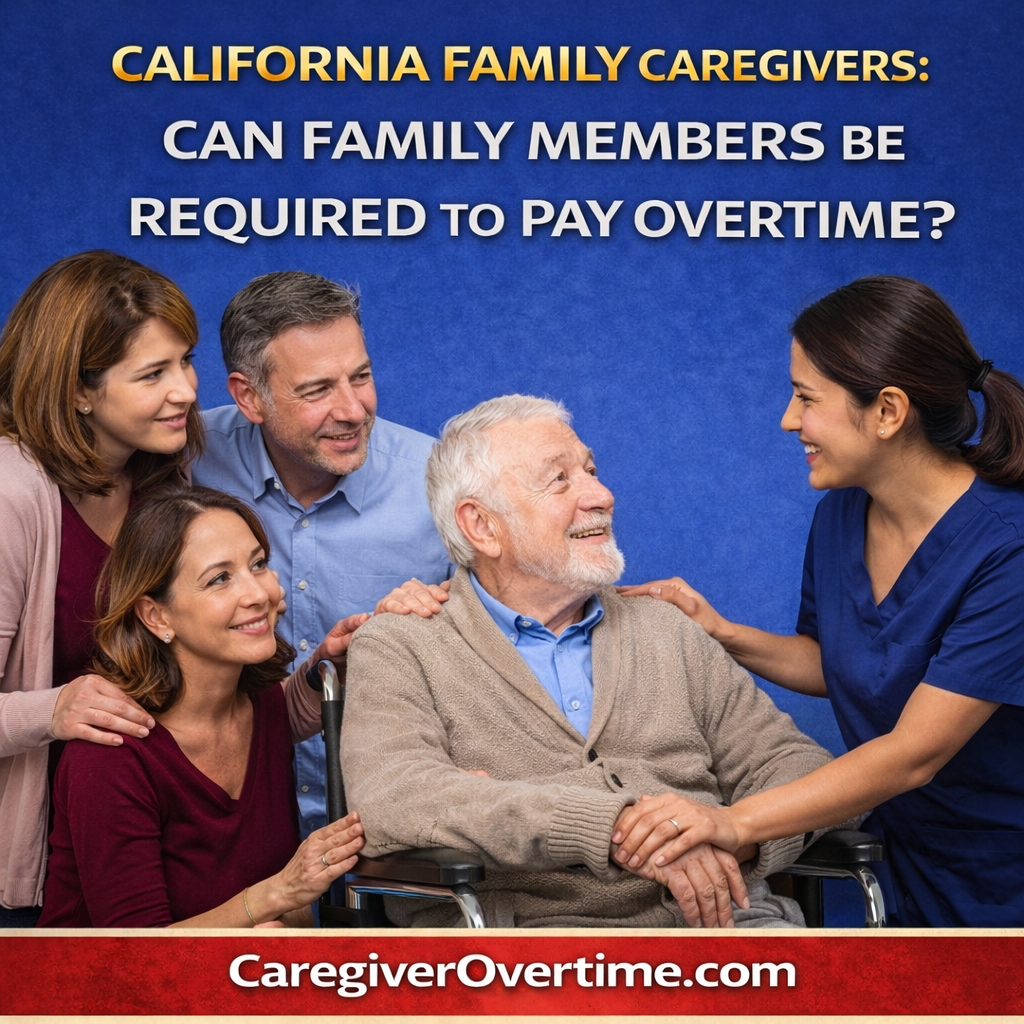
Many caregivers in California work directly for a private family rather than through a home care agency.
Often, the arrangement feels informal:
You are hired directly by a son or daughter
You are paid cash or a flat daily rate
There is no written contract
The family tells you they cannot afford overtime
You are treated “like family”
But even when a caregiver works for a private household, California labor laws may still apply.
In many cases, family members who hire caregivers are legally required to pay:
Minimum wage
Overtime
Meal and rest break premiums
Final wages
Sick pay
Private Families Can Be Employers
Under California law, a private family can still be considered an employer.
If a family:
Hires you directly
Controls your schedule
Decides your duties
Pays you for caregiving services
They may have the same legal responsibilities as a business.
Many families do not realize this — but lack of knowledge does not excuse wage violations.
When Is Overtime Required?
Most caregivers in California are entitled to overtime after:
9 hours in a workday
45 hours in a workweek
Overtime is generally paid at:
1.5 times your regular hourly rate
This means if your regular rate is $20 per hour, overtime should generally be:
$30 per hour
If you regularly work:
12-hour shifts
Overnight shifts
Weekend shifts
24-hour shifts
You may be owed significant unpaid overtime.
“We Paid You a Daily Rate” Is Not a Legal Defense
Many private families pay caregivers:
$150 per day
$200 per day
$250 per day
A weekly salary
But paying a flat rate does not eliminate overtime obligations.
Even if you agreed to a daily rate, the law may still require overtime pay based on the actual number of hours worked.
Live-In Caregivers and Family Employers
Many caregivers live in the client’s home.
Even in live-in situations, families may still be required to pay:
Minimum wage
Overtime
Meal break penalties
Rest break penalties
Sick leave
Live-in arrangements do not automatically eliminate employee rights.
What if the Family Paid You Cash?
Many private family caregivers are paid:
Cash
Zelle
Venmo
Checks without pay stubs
That does not change your rights.
If you worked the hours, you may still be entitled to unpaid wages.
Employers cannot avoid labor laws simply by paying “off the books.”
What if the Family Says You Were an Independent Contractor?
Families sometimes call caregivers “independent contractors” to avoid paying overtime.
But if the family controlled:
Your schedule
Your hours
Your duties
Your work location
You may actually be an employee under California law.
Misclassification is common in caregiving jobs.
Can More Than One Family Member Be Responsible?
In some situations, yes.
If multiple family members were involved in:
Hiring you
Supervising you
Paying you
Setting your schedule
More than one person may potentially share legal responsibility.
This is especially common when siblings jointly arrange care for a parent.
What if the Family Cannot Afford Overtime?
Many caregivers feel guilty asking for fair pay because they know the family is under stress.
But financial hardship does not eliminate wage obligations.
California law still requires employers to pay for all hours worked.
Caregivers provide important, demanding services and deserve fair compensation.
Common Violations by Family Employers
We frequently see private families fail to provide:
Overtime pay
Minimum wage
Meal breaks
Rest breaks
Sick pay
Pay stubs
Final paychecks
Because many families do not understand employment law, these violations are common.
How Far Back Can You Recover Unpaid Wages?
In many cases, caregivers may be able to recover:
3 years of unpaid wages
Up to 4 years in some situations
Waiting time penalties
Break penalties
Interest on unpaid wages
Over multiple years, these claims can become substantial.
Immigration Status Does Not Affect Your Rights
All caregivers in California have wage rights, regardless of immigration status.
Employers cannot:
Threaten deportation
Use immigration status against you
Refuse to pay overtime
Retaliate for asking questions
California law protects all workers.
How to Protect Yourself
If you currently work for a private family, keep records of:
Hours worked
Start and end times
Overnight interruptions
Payment amounts
Text messages
Venmo or Zelle payments
Schedule changes
Documentation can make a major difference later.
Final Takeaway
Private families in California can absolutely be required to pay caregivers overtime.
Even if:
You were paid cash
You were paid a daily rate
You worked in someone’s home
You never signed a contract
You may still have important legal rights.
At CaregiverOvertime.com, we help caregivers understand whether they are owed overtime and unpaid wages.
You care for others every day. You deserve to be paid fairly too.
👉 Contact Us for a free, confidential consultation.